
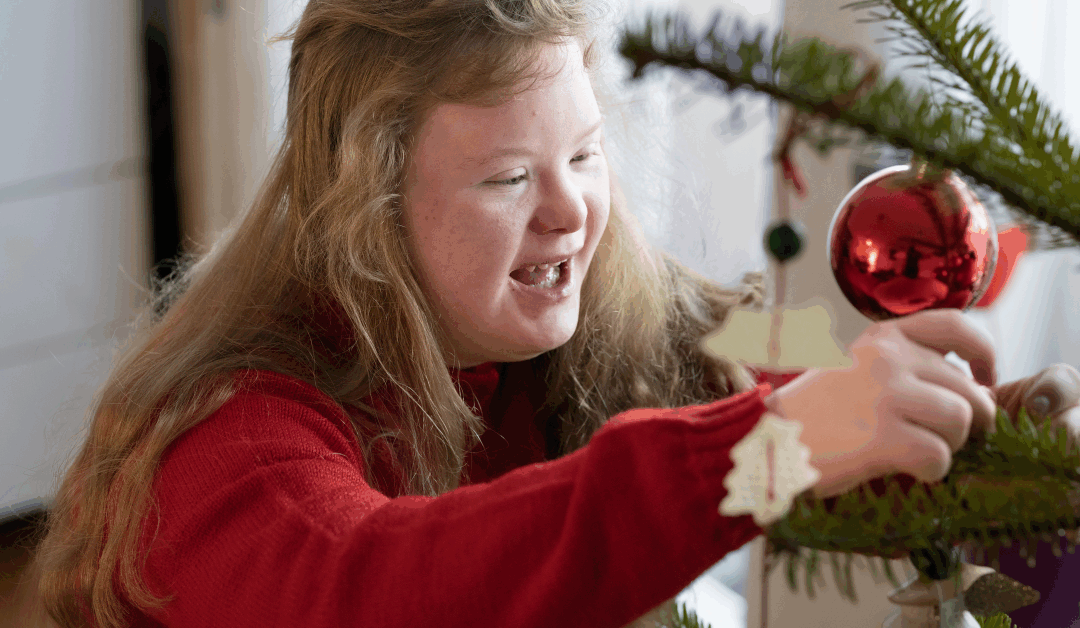
At Hope Human Services, we know that the holiday season brings joy, togetherness, and tradition, but it can also bring sensory overload.
For many families navigating the holidays, the celebrations that others look forward to can quickly become overwhelming. Flashing lights, loud gatherings, strong smells, and changes in routine can leave loved ones feeling anxious or withdrawn instead of joyful.
The good news is that holidays and sensory disabilities can exist beautifully together when celebrations are designed with comfort and inclusion in mind. With a little planning, families can create traditions that honor both festive joy and sensory needs.
This guide explores how holiday celebrations can be adapted for individuals with sensory disabilities, what kinds of sensory-friendly activities to try, and how disability support services can help families create calm, meaningful traditions.
How can holiday celebrations be adapted for individuals with sensory disabilities?
The holidays are often full of excitement and sensory input. Bright decorations, loud music, and crowded spaces can make people with developmental or sensory disabilities feel overwhelmed. For families balancing holidays and sensory disabilities, the goal is not to remove the fun but to make it more accessible and soothing.
- Control lighting and noise
Flashing lights and background music can overstimulate the senses. Use soft, steady lighting such as warm white string lights or candles. Keep music gentle and at a low volume. If you are visiting someone else’s home, bring noise-canceling headphones or ear defenders to help manage sensory overload during the holidays.
- Offer quiet spaces
Even short breaks can make a big difference. Designate a calm area such as a bedroom, corner, or quiet room where loved ones can retreat when the environment feels too intense. At Hope Human Services, our supportive living spaces and sensory rooms are built with this same idea in mind, offering peaceful zones where people can relax during the holidays and other stressful events.
- Prepare with visual schedules
Surprises are fun for some people, but stressful for others. Create a visual calendar or picture-based timeline of holiday events. This helps individuals with developmental disabilities know what to expect and reduces anxiety connected to the holidays.
- Choose smaller gatherings
Large, noisy parties can easily overwhelm those with sensory sensitivities. Opt for smaller gatherings with close friends or family. Keep the environment predictable, the group intimate, and the activities simple. These small changes make the holidays more comfortable and enjoyable.
- Honor familiar traditions
Routine provides safety and reassurance. Keep a few favorite foods, rituals, or songs consistent each year. Familiar moments act as anchors and make the holiday season feel secure for those managing sensory disabilities and sensitivities.
When we adapt holiday celebrations with thoughtfulness, we give every person a chance to experience joy in a way that feels safe and meaningful.
What are some sensory-friendly holiday activities for people with developmental disabilities?
For many families, the holidays mean finding creative ways to celebrate that are both engaging and calm. The key is to focus on experiences that are enjoyable without overwhelming the senses.
Here are some sensory-friendly holiday activity ideas that can bring joy to everyone:
- Cozy decorating sessions
Instead of bright, flashing lights or glittery décor, use soft textures, warm lighting, and natural materials such as pinecones or felt ornaments. Decorating slowly and together gives everyone time to adjust and enjoy the process.
- Simple baking and cooking
Cooking can be a wonderful sensory experience when done mindfully. Choose recipes that involve gentle stirring, shaping dough, or decorating cookies without strong smells or loud timers. Involving loved ones in these activities helps them feel part of the celebration while keeping the holidays peaceful.
- Sensory craft stations
Set up small crafting spaces where individuals can make ornaments, cards, or decorations using soothing materials such as clay, soft fabrics, or paint. Keeping crafts simple for tactile supports relaxation and enjoyment.
- Nature walks and light displays
Enjoy outdoor holiday lights at a quiet park or go on a short evening stroll. Fresh air and gentle movement can calm the body while still celebrating the holidays in a sensory-friendly way.
- Movie or music nights at home
Create a cozy setup with dimmed lights, blankets, and familiar movies or gentle instrumental music. Keeping volume low and lights soft creates a relaxing sensory experience, helping everyone enjoy the holidays in a comfortable way.
Simple, sensory-aware activities help transform the holidays from overwhelming to joyful.
How do sensory-friendly strategies reduce stress during holiday gatherings?
Holiday stress affects everyone, but for those managing sensory disabilities and sensitivities, it can feel even more intense.
The combination of travel, social expectations, and unpredictable environments can quickly lead to sensory overload. Sensory-friendly strategies create predictability, safety, and calm, which are essential for reducing stress.
- Predictability lowers anxiety
When individuals know what to expect, they can relax. Visual schedules, countdowns, and brief explanations of upcoming activities make the holidays far less stressful.
- Calm environments support regulation
Soft lighting, minimal background noise, and consistent scents help the body stay balanced. Overstimulation can lead to tension or withdrawal. A calm environment allows individuals to feel comfortable and present.
- Choice and control empower individuals
Offering small choices about activities or food can reduce anxiety. A sense of control helps individuals with sensory or developmental disabilities feel more comfortable.
- Built-in breaks prevent overwhelm
Plan for quiet time before or after events. Allow rest periods in a sensory room, car, or peaceful corner. At Hope Human Services, our sensory-friendly spaces are designed for exactly these moments, giving people a place to recover and recharge.
- Communication reduces frustration
Some people may not be able to express discomfort directly. Caregivers can use gestures, communication cards, or simple check-ins to ensure understanding. Clear communication helps keep the holidays calm and connected.
When families focus on comfort and predictability, stress levels drop and connection grows.
How can disability support services help families create inclusive holiday traditions?
Families navigating holidays and sensory disabilities do not have to figure it all out alone. Disability support services can help plan and personalize traditions that respect each person’s sensory and emotional needs.
- Creating individualized support plans
Support workers can collaborate with families to identify triggers and create practical strategies for the season. This might include adjusting schedules, choosing quieter activities, or providing visual aids. Individualized care can make the holidays smoother and more enjoyable.
- Offering structured sensory-friendly environments
At Hope Human Services, our supportive living spaces and sensory rooms are designed to provide comfort and calm. Soft lighting, gentle textures, and sound control help individuals regulate their environment. These settings show how to handle holidays with sensory disabilities at home or in community spaces.
- Providing caregiver education
Disability support services can teach caregivers how to prepare for the holidays by using sensory kits, visual tools, and structured routines. When caregivers are supported, the entire family feels more confident.
- Encouraging community inclusion
Support services can connect families with inclusive events such as smaller community gatherings, accessible holiday markets, or sensory-safe Santa visits. These experiences show that holidays and sensory disabilities can be celebrated together with joy and understanding.
- Building confidence and resilience
With consistent care and planning, families can approach the holidays with greater ease. The more supported everyone feels, the more energy can go toward making meaningful memories instead of managing stress.
Final thoughts: Calm, comfort, and connection
Holidays and sensory disabilities can come together beautifully when compassion and preparation guide the season. The best traditions are those that bring peace and belonging. With soft lighting, calm spaces, predictable routines, and supportive services, families can create holiday moments filled with joy and comfort.
At Hope Human Services, we believe every person deserves a holiday season that feels safe, welcoming, and kind. Our sensory-friendly spaces and disability support services help families find ways to celebrate that honor both happiness and calm.
When we center understanding and flexibility, holidays and sensory disabilities become not only manageable but meaningful. The true spirit of the season shines brightest when everyone feels included, comfortable, and loved.
Want A Helping Hand?
Hope Human Services provides disability services in Washington State. Our team doesn’t just provide support, we create exceptional life experiences.